
Security Guard Records His Attack on a Store Customer Who Suffered a TBI
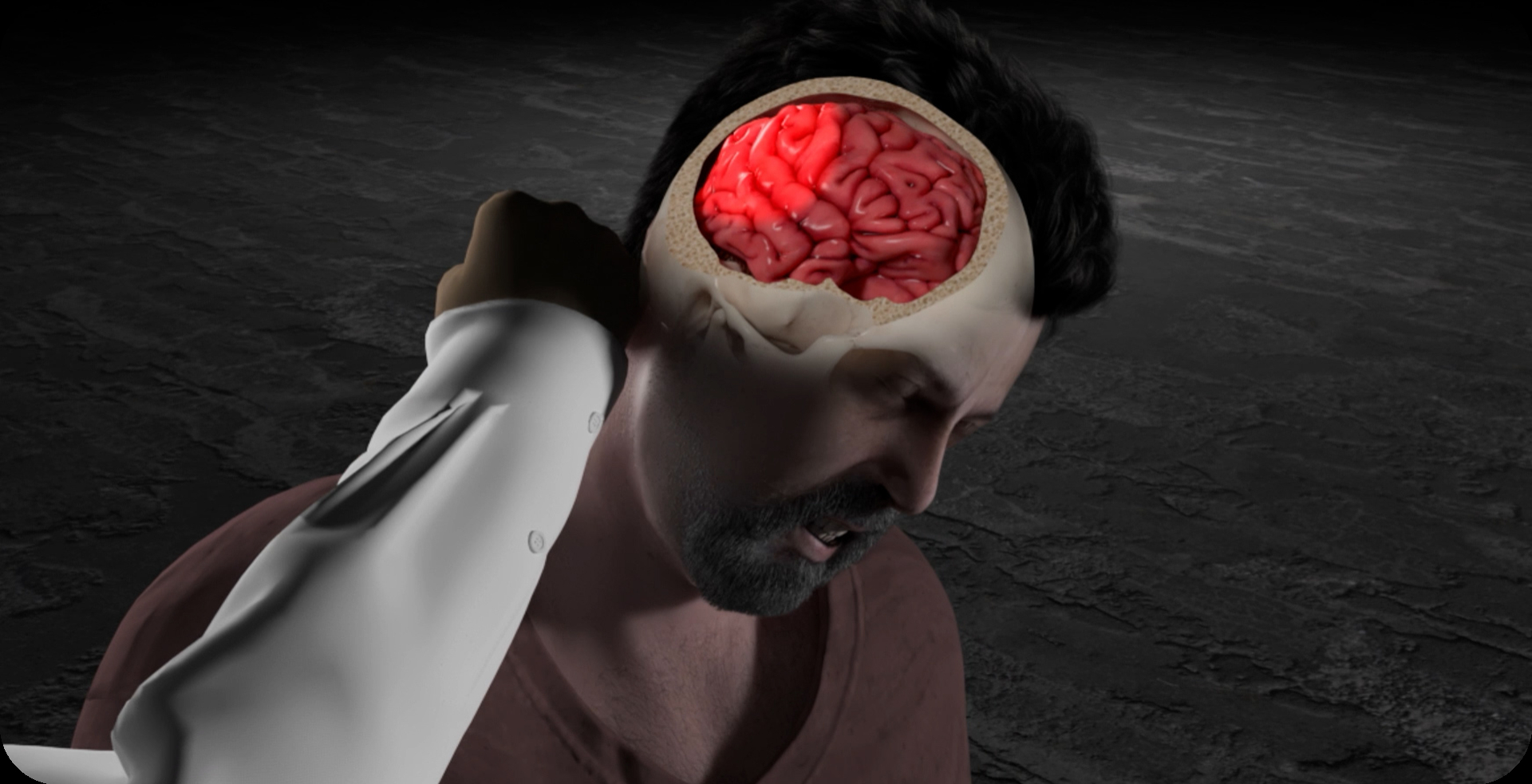
A security guard blindsided the man with a blow to the back of his head. The victim collapsed, where he was repeatedly kicked in the head.
Watch the Case FeatureA major retailer and the security operation working on its behalf had a duty to ensure that customers leaving the store were not subjected to unreasonable force. That duty was shattered when a security guard violently assaulted a man as he exited the premises, striking him from behind and leaving him unconscious on the pavement. The attack caused serious injuries, including orbital fractures and a significant traumatic brain injury. For the plaintiff, a hard-working man who had simply crossed paths with the wrong guard at the wrong moment, the consequences would not end when the assault did.
The violence unfolded quickly, but its effects lasted far longer. After the initial blow to the back of his head, the man collapsed to the ground and remained unresponsive for more than two minutes. While he lay there, the guard circled and taunted him, even recording part of the aftermath on a phone. When the plaintiff finally regained enough awareness to get up and leave the scene, he was dazed, badly hurt, and far from safe. He would ultimately require emergency medical care, and the injuries from the assault would leave him facing enduring neurological and functional challenges tied to his brain trauma.
Attorney Shahrad Milanfar, of Milanfar Law Firm, P.C., was brought into the matter as trial counsel after two prior firms had failed to handle the case properly. Shahrad was well suited for the assignment. His practice handles complex personal injury, police brutality, and nursing home abuse cases, and he brought both trial experience and a willingness to take over difficult matters that needed to be rebuilt from the ground up. From the start, the goal goal was not only to correct what had gone wrong before, but to represent the client the way he deserved — by showing who he was before the attack and what the traumatic brain injury would cost him for the rest of his life.
That work began with cleanup and reconstruction. Because Shahrad’s team had not been involved from the outset, they first had to undo mistakes left behind by prior counsel and develop the case in a form that could actually be tried. They gathered additional facts, reexamined the available video evidence, and aligned the expert support necessary to explain both the assault itself and the full scope of the plaintiff’s injuries. As the case took shape, the evidence made clear that this was not a minor altercation inflated after the fact. It was a documented attack followed by a serious brain injury that needed to be presented clearly and credibly.
The defense nevertheless tried to minimize the case at every turn. As in many traumatic brain injury cases, they seized on the fact that injured people often tell emergency providers they did not lose consciousness — even when they were, in fact, knocked out and simply cannot remember it. Using that familiar line of attack, the defense argued the plaintiff had not truly lost consciousness and therefore had not suffered the kind of traumatic brain injury he claimed. They also advanced the theory that although the plaintiff suffered orbital fractures, the force of the blows somehow did not reach his brain. The strategy was straightforward: downplay the assault, narrow the mechanism of injury, and cast doubt on the seriousness of the long-term harm.
Shahrad fought back by building a case rooted in objective proof. He assembled neurologists, neuropsychologists, vocational rehabilitation experts, life care planners, and a security expert to establish both liability and damages. But one key challenge remained: the defense’s theory needed to be disproved in a way that was immediate, memorable, and medically grounded. Shahrad believed visual storytelling was central to persuasion, especially when paired with expert testimony. After learning about DK Global’s work and seeing how their presentations could strengthen trial themes, he brought the team in to create an animation that would show exactly how the assault happened, how the force traveled through the skull, and how the plaintiff sustained a coup-contrecoup brain injury.
The presentation began with enhanced surveillance footage showing the plaintiff exiting the store while the guard followed behind. In the parking lot, the guard struck him in the back of the head, sending him to the asphalt. A timer emphasized that he remained unresponsive for more than two minutes, while the guard’s own phone footage showed him taunting the unconscious man. The visuals then moved into a reconstruction of the assault, using transparent anatomical views to show how the force affected the skull and brain. The presentation concluded with radiology imaging of the facial fractures and animated brain views tied to the functional losses identified by the experts.
The animation became part of a broader demand package that was presented before mediation. Along with expert testimony and medical records, the DK Global animation was geared to breaking a years-long matter for the injured client. In response, the defense presented a settlement offer that would address the plaintiff's needs for the rest of his life.
Shahrad Milanfar is the founding partner of Milanfar Law Firm, P.C. His career has focused on catastrophic personal injury, product liability, nursing home abuse, police brutality / civil rights, and truck accident cases. He has been selected as a Super Lawyer from 2020 to 2024 and has been one of the national trial lawyers top 100 from 2022 to 2024. One of Shahrad's recent victories includes a $32,087,227 verdict from the Cooley v. Life Care Servs., LLC case. This verdict was ranked as the 17th largest verdict in California in 2023 from TopVerdict.com.
[DK Global] did a great job of creating an accurate animation; creating and putting details in that were important. And also making sure that our experts agreed that the animation was, in fact, something that they could stand behind
 Animation
 Animation