
Washington CPS Narrowed a Child’s Death to One Moment to Avoid the Full Horror
CPS ignored dangerous conditions at one home, allowing a child to be reunited with his parents. Soon after, the child died in their care.
Watch the Case FeatureA small child’s body struck a hard surface after his drug-addicted mother lifted him above her head and threw him to the ground. He lay still from the impact. In a panic, the mother doused her baby in ice water to jolt him awake — but only managed to cause hypothermia. The fatal impact ended months of starvation, torture, and abuse inside the home where he was supposed to be safe. Washington State Child Protective Services had been responsible for protecting him and his siblings while determining whether their biological parents could safely regain custody. Instead, CPS took the children away from a protective aunt and returned them to a home marked by drug abuse, instability, and years of warning signs. The young boy, named Anthony, endured the worst of that danger. His siblings lived in the same neglectful home, witnessed the abuse, and were left with lasting emotional trauma after his death.
What happened was not a single act of violence appearing out of nowhere. The child — not old enough to be out of diapers — had already been weakened by prolonged abuse, malnourishment, and neglect before the fatal assault ever occurred. Medical evidence showed that the boy’s death was not just the result of one final blow, but the culmination of sustained mistreatment in a home CPS had the duty and ample opportunity to keep him out of.
Tim Tesh and Jon Barash of Ressler & Tesh became involved after a family member asked them to investigate whether Washington CPS could be held liable for the child’s death. Their firm focuses almost exclusively on abuse cases involving children and is well-equipped to handle difficult litigation against institutional defendants. From the outset, Tim needed to determine when CPS became involved, what it knew, what duties applied under Washington law, and whether its failures created an actionable claim.
That work uncovered years of CPS involvement with the family. Tim and Jon reconstructed prior removals, the biological parents’ known drug abuse, and repeated warning signs that the children were unsafe in their care. What emerged was not a single oversight, but a pattern of missed opportunities to intervene. The attorneys built their theory around foreseeability: this death was not simply the result of one violent act, but the predictable outcome of returning vulnerable children to a dangerous home and failing to protect them as conditions worsened.
The State defended the case aggressively from the start. Multiple government attorneys were assigned, and the defense challenged whether CPS’s conduct created any legal liability at all. The fight centered on duty and causation. The defense tried to isolate the final fatal assault rather than the broader history of State involvement and inaction. To prevail, Tim and Jon had to prove not only that the abuse occurred, but that CPS’s failures helped make the death foreseeable and preventable.
To do that, they built a case grounded in chronology, institutional history, and medical proof. They showed that the child’s fatal brain injury could not be understood in isolation because he had already been physically weakened by at least three months of starvation, torture, and neglect. But the facts were emotionally devastating and medically complex, and records alone could not communicate the full picture. The attorneys needed a way to unify the abuse history, the injury evidence, and the liability themes into one coherent trial-ready story. That is when the team turned to DK Global.
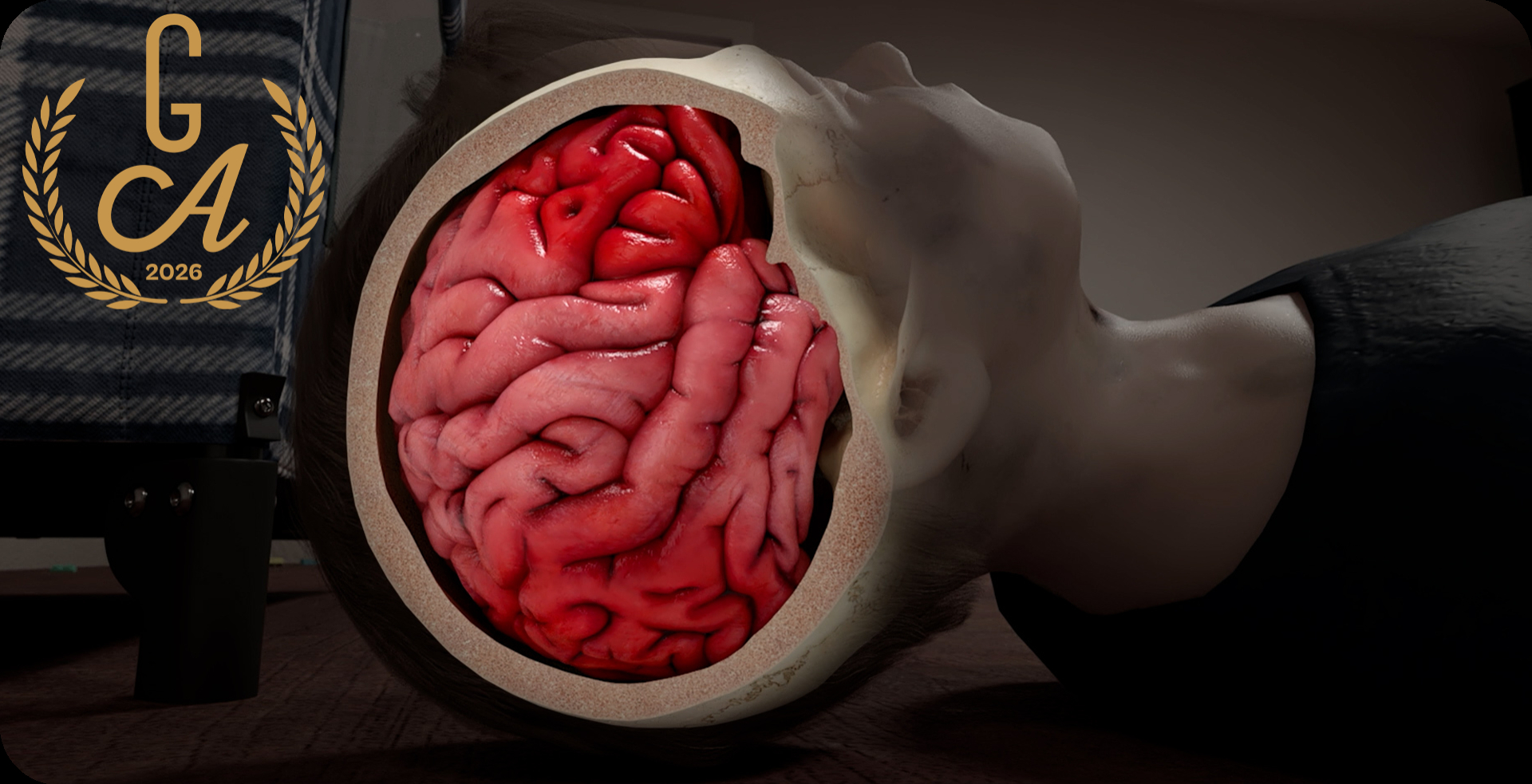
DK Global created a visual presentation that organized the evidence into a single persuasive narrative. It began by showing the child’s deterioration over time, establishing that the fatal event came at the end of sustained abuse. It then reconstructed the mother throwing the child onto a hard surface. From there, the visuals moved into anatomical views explaining the traumatic brain injury and internal damage. The presentation then connected that fatal injury back to the child’s severely weakened condition, tying the medical proof directly to the attorneys’ causation theory and the liability case against the State.
The case did not resolve immediately. But as trial approached, the defense was forced to confront the full evidentiary picture and how it would be shown to a jury. The DK Global presentation made clear that this was a preventable death preceded by repeated warnings, prolonged abuse, and State inaction. Faced with that risk, Washington ultimately agreed to resolve the matter in a multiple eight-figure settlement on behalf of the child’s estate and surviving beneficiaries. The result provided meaningful compensation, spared surviving children from testifying, and delivered accountability in a case built on proving that CPS had the information, the opportunity, and the duty to act — but failed to do so.
Tim Tesh is a partner at Ressler & Tesh and has fought for victims of abuse and sexual abuse in the state of Washington and nationwide. His firm solely focuses on helping children where the victims of physical and sexual abuse were the result of negligence of persons or entities charged with protecting them. He is a member of the Washington State Association for Justice and has been selected as a Super Lawyer from 2019-2025.
As an attorney at Ressler & Tesh, Jon Barash has specialized in representing child victims against schools, charities, hospitals, and the state of Washington. His cases have involved wrongful death, neglect, and physical and sexual abuse. He is a member of the Washington Bar Association and the Washington State Association for Justice. In 2010, he was selected as a "Rising Star" in his field.
And when the State started to see what the final product was, and how it was being refined between us and DK Global, there was eventually a multiple eight-figure settlement offer that was accepted.
 Spine
 Case Feature