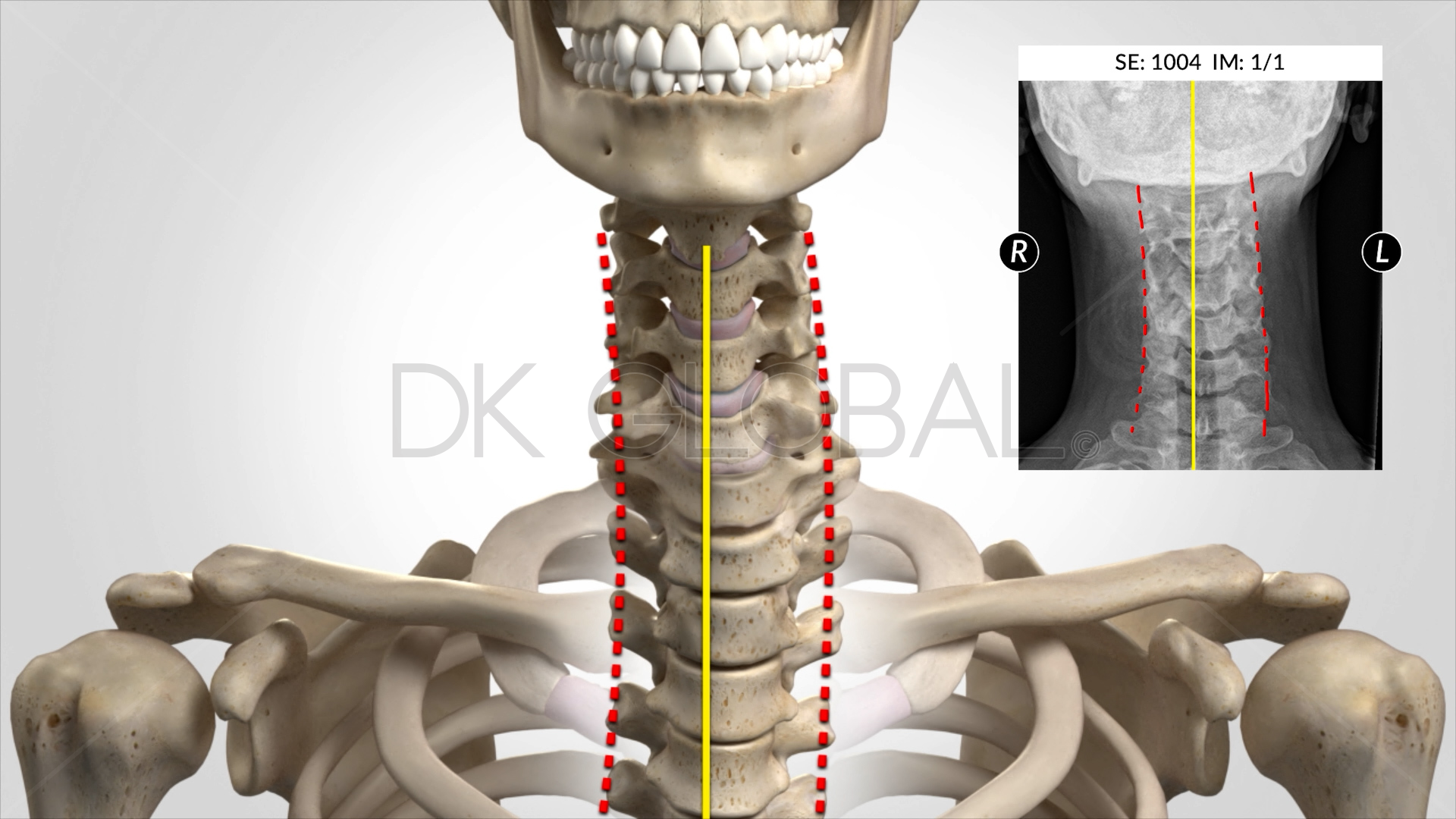
Effective medical illustrations for legal trials work best when they connect anatomy, causation, and damages in a way that feels medically credible and visually undeniable.
In catastrophic injury litigation, the challenge is rarely limited to identifying a torn structure, fractured bone, or surgical implant. The harder task is showing what the trauma actually did to the plaintiff’s body, why treatment became invasive, and how that injury changed a person’s life. That is where advanced demonstratives — 3D medical illustrations, photorealistic surgical animations, colorized imaging, and mechanism-of-injury visuals — become essential.
The most effective visuals are built from the record, but they should not feel flat or abstract. Radiology, operative reports, expert opinions, and treatment chronology have to be translated into visuals that show force pathways, tissue damage, surgical sequence, and physical consequence.
When contested liability, comparative liability, or disputed causation is in play, those details matter. A well-built visual does not just simplify medicine. It helps a jury understand the trauma, the invasiveness of treatment, the reality of pain and suffering, and the biological basis for damages.
How do you create effective medical illustrations for legal trials?
Effective medical illustrations for legal trials are created by starting with the core dispute in the case, then building the visual around verified anatomy, imaging, medical records, operative details, and expert testimony.
The strongest visuals show not only what part of the body was injured, but how the trauma occurred, what pathology resulted, what surgery was required, and why the injury experience matters in damages.
In serious cases, photorealism matters because it helps convey the real physical consequences of trauma and treatment in a way simplified drawings often cannot, while still staying grounded enough to satisfy credibility and admissibility concerns.
Start With the Dispute, Then Build the Anatomy Around It
An effective medical illustration begins with the legal problem, not the artwork. If the case turns on whether a disc herniation was degenerative, whether a knee surgery was collision-related, or whether a future procedure is more likely than not, the visual has to answer that exact dispute.
That may require combining 3D medical illustrations with enhanced imaging, surgical animation, or mechanism-of-injury analysis so the sequence from force to pathology to treatment is visible.
Vector forces, body position, joint loading, and tissue failure all become useful when the defense argument is that the event was too minor to produce the claimed harm.
The strongest trial visuals also account for how people process complex evidence. Medical records are linear, but comprehension is visual.
Shawn McCann, a partner at BD&J Injury Lawyers, litigated for a woman who was T-boned by a commercial pickup and sustained many catastrophic injuries. The crash left her with an incredibly damaged spine and legs that affected her ability to work her laborious job and live a normal life.
Attorneys! — Need a 3D Trial Graphic for your next case?

In fact, the defense went so far as to argue that the victim’s injuries were due to her job’s strenuous activity rather than the crash itself.
To counter, Shawn explained that his team needed “to create the visual aids so a jury could really see what had happened to [his client] physically, emotionally, and how [the collision] affected [their] life.”
That is the real goal of a visual.
A demonstrative should not decorate testimony. It should organize the facts so causation becomes easier to follow and the extent of injury becomes harder to minimize.
Why Photorealism Matters in Medical Animations
Photorealism is not just a style choice. In the tightly contested cases, it is a persuasion tool grounded in accuracy.
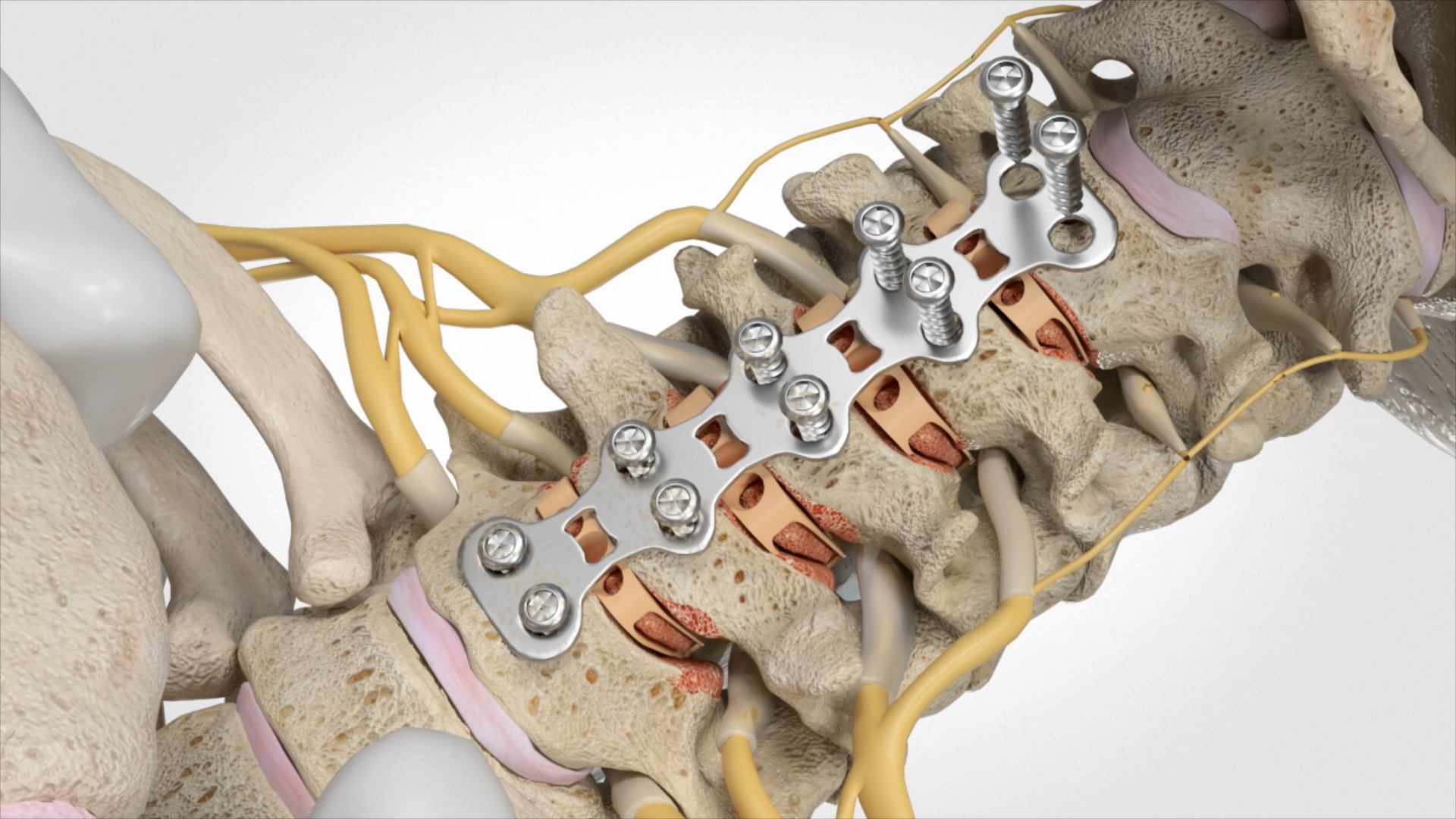
When a surgery is central to damages, a photorealistic animation can show the depth of tissue disruption, the confined internal space, the placement of hardware or instruments, and the bodily invasion required to treat the injury.
That matters because pain and suffering often become too abstract when they are left on the page as operative language or billing codes.
A jury may hear “arthroscopy,” “fusion,” or “debridement” and understand the word without appreciating the lived physical reality behind it.
That added realism also helps explain why higher-end medical animations cost more to produce. Precision anatomy, realistic lighting, depth, texture, motion, and surgical sequencing require more development than a simplified diagram.
But that investment can do more evidentiary work.
That was the aim of Jesse French when working with DK Global. Jesse is a veteran attorney at BD&J who litigated with Shawn on the woman’s case.
In that same case, while working on the liability theory, Jesse’s team focused on how the defense was minimizing the accident’s role in the injuries the victim had sustained.
So they ditched the overwhelming extraneous data and opted for a DK Global animation that took juries step-by-step through the operations she had already gone through. And even more important were the animations of the surgeries she had yet to receive.
He said the goal of their animation was to make a future surgery “more concrete and real” for jurors evaluating damages.
“We wanted to tell our client's story in an accurate and detailed manner,” French said. “We wanted the jury to be able to understand what the science was in a way that was straightforward, that anyone off the street could understand.
“We recognize that the people, most of the people involved in this case, they're not doctors, they're not scientists. And so, they have to be able to see and understand what's happening in something like an arthroscopic surgery… We want a story that is simple, straightforward, accurate and easy to understand.”
In the end, the case settled for a confidential amount that made the client very happy. But that was after the defense never once offered to settle, holding out right until the eve of trial.
When a visual accurately conveys the trauma, invasiveness, pain, and suffering tied to injury or surgery, it gives damages a form the viewer can actually process.
Use Experts to Validate to Build Credibility
Medical illustrations become far more effective when they are built in collaboration with treating physicians and retained experts.
That means the illustrator is not guessing at biology, pathology, or surgical sequence. The visual should be checked against imaging, operative notes, narrative reports, and deposition themes.
If there is a spinal fusion, for example, the hardware, level, approach, and tissue effects should match the record. If there is an arthroscopy, the damaged structure and repair steps should reflect what the surgeon actually did or expects to do.
That process also improves testimony. Shawn and Jesse were able to use it in the injured woman’s case since the treating doctors reviewed the animations step by step before deposition, then used them to explain the procedure in detail.
The result, according to Shawn, was that their medical experts “really become professors instead of just doctors.” That is a useful benchmark for what a good medical illustration should accomplish.
It should make the expert more confident, his evidence more teachable, and explanations more precise.
Why Mechanism-of-Injury Matters in Medical Visuals
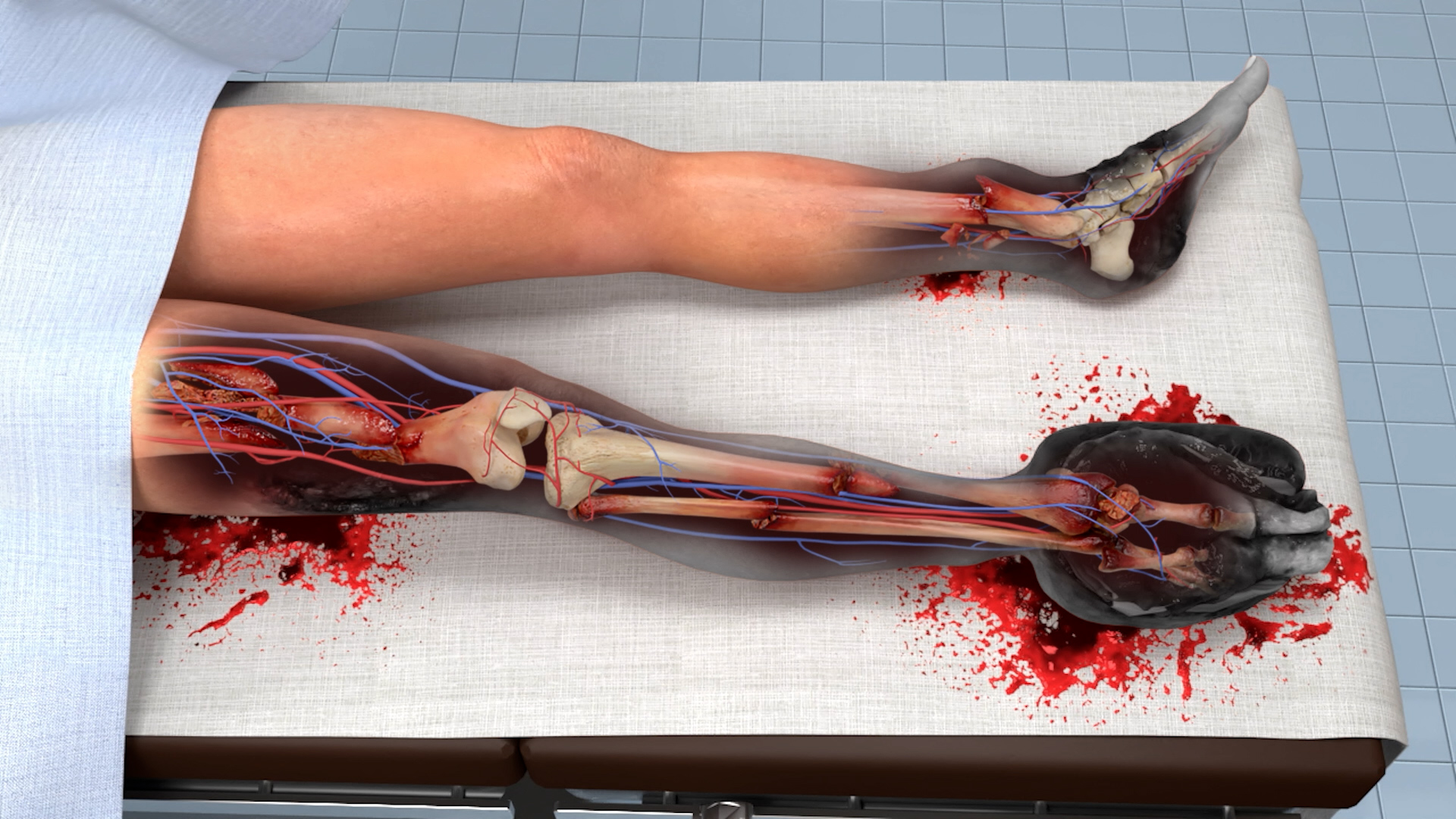
The most effective medical illustrations do not always stop at anatomy. In many personal injury cases, especially those involving disputed liability or contested damages, the missing link is mechanism of injury.
That is why some of the most powerful courtroom visuals bridge reconstruction and medicine. They show how vector forces, occupant motion, compression, torsion, or secondary impact created the biological injury at issue.
Attorney Charles Blaska of Blaska Holms Law described the how these type of visuals helped his case: “The advantages of using medical illustrations and demonstratives [are] incredible... it allowed us to present the case by saying less and allowing the evidence to say more.”
Charles’s case dealt with a driver who was hit by a truck. And while the victim sustained serious injuries, they also had years worth of prior injuries that required multiple stints in the hospital. The defense plagued the case with doubt and derision for the origins of the injuries. Still, in the end, Charles was able to attain a favorable outcome to the tune of $4,083,359.20.
Accurately showing the effects from the injury captures the real objective. An effective medical illustration is not there to replace the evidence. It is there to organize it, so causation, damages, and credibility become harder to attack.
Instead of presenting surgery as a disconnected medical event, the visual ties the trauma to the tissue damage and the tissue damage to treatment.
FAQ
Why does photorealism matter in a medical animation?
Photorealism helps viewers grasp the real physical consequences of trauma and surgery, including invasiveness, pain, suffering, and long-term impairment, while making damages less abstract.
When is a 3D surgical animation better than a static illustration?
When sequence, movement, instrument placement, or internal spatial relationships are important to proving causation, treatment necessity, or future damages.
Illustrations are great for highlighting the depth of an injury as well as the before-and-after. An animation, though, cuts deeper into the logical endpoint of a party’s negligent actions and how they were liable to the resulting damages.